
Schools & JIA Awareness
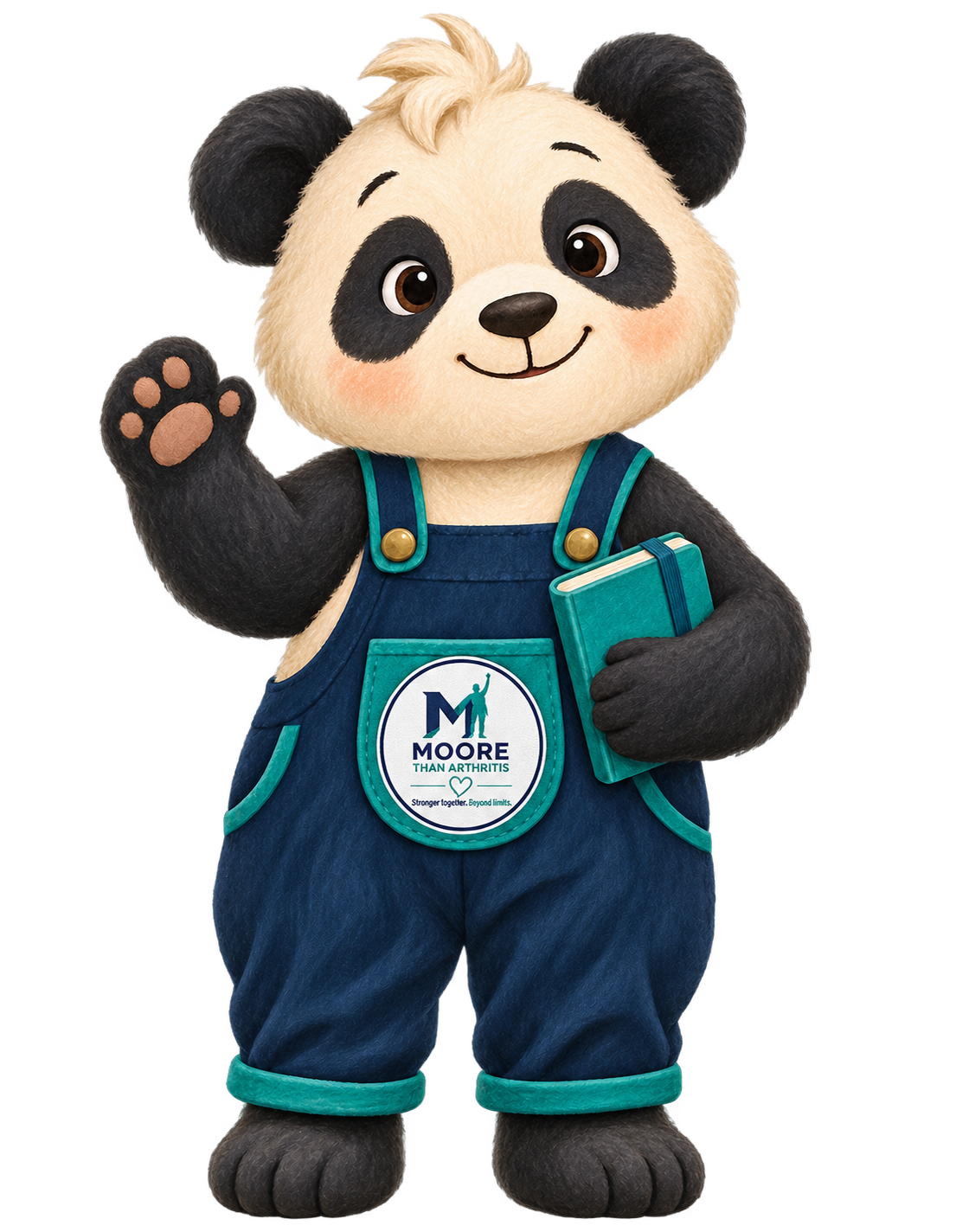
Meet Pip the Panda
Stories, activities and thoughtful conversations about different days, school life and friendship. Meet Pip, Moore Than Arthritis's curious panda, who loves maps, making things and spending time with friends. Pip also lives with juvenile idiopathic arthritis (JIA). Through three illustrated guides, children and trusted adults can explore asking for help, joining in and making room for different needs.
For shared reading around ages 5–8, with additional discussion pages for ages 9–12. Choose the pace and activities that suit each child.
The three guides
Each guide is free to download. No account, email address or payment is required.
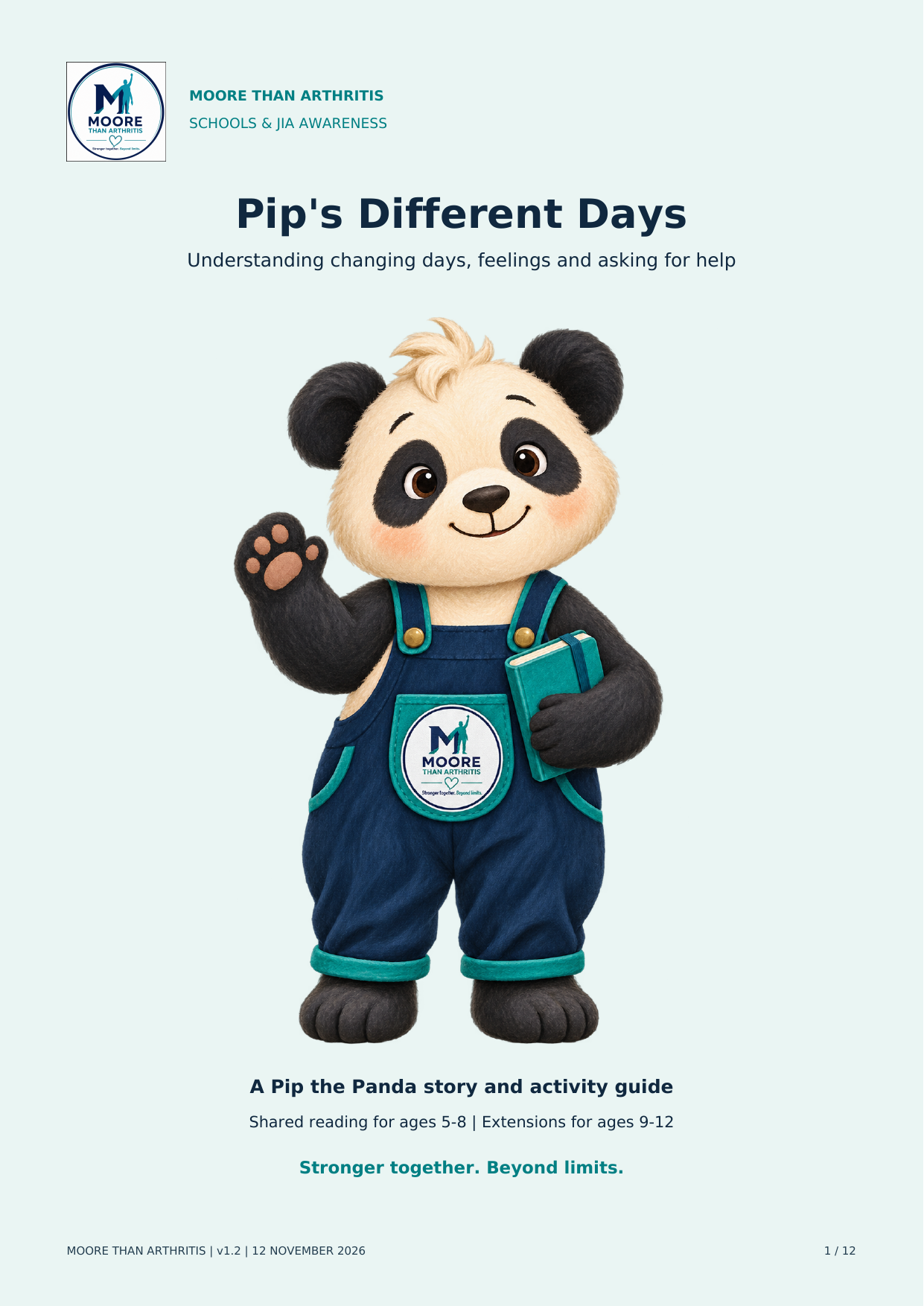
Pip's Different Days
Explore changing symptoms and energy, mixed feelings, asking for help and making plans with room to change. Includes a complete story, a different-day map, conversation prompts, older-reader activities and adult guidance.
Free illustrated PDF | 12 pages | Version 1.2
Download Pip's Different Days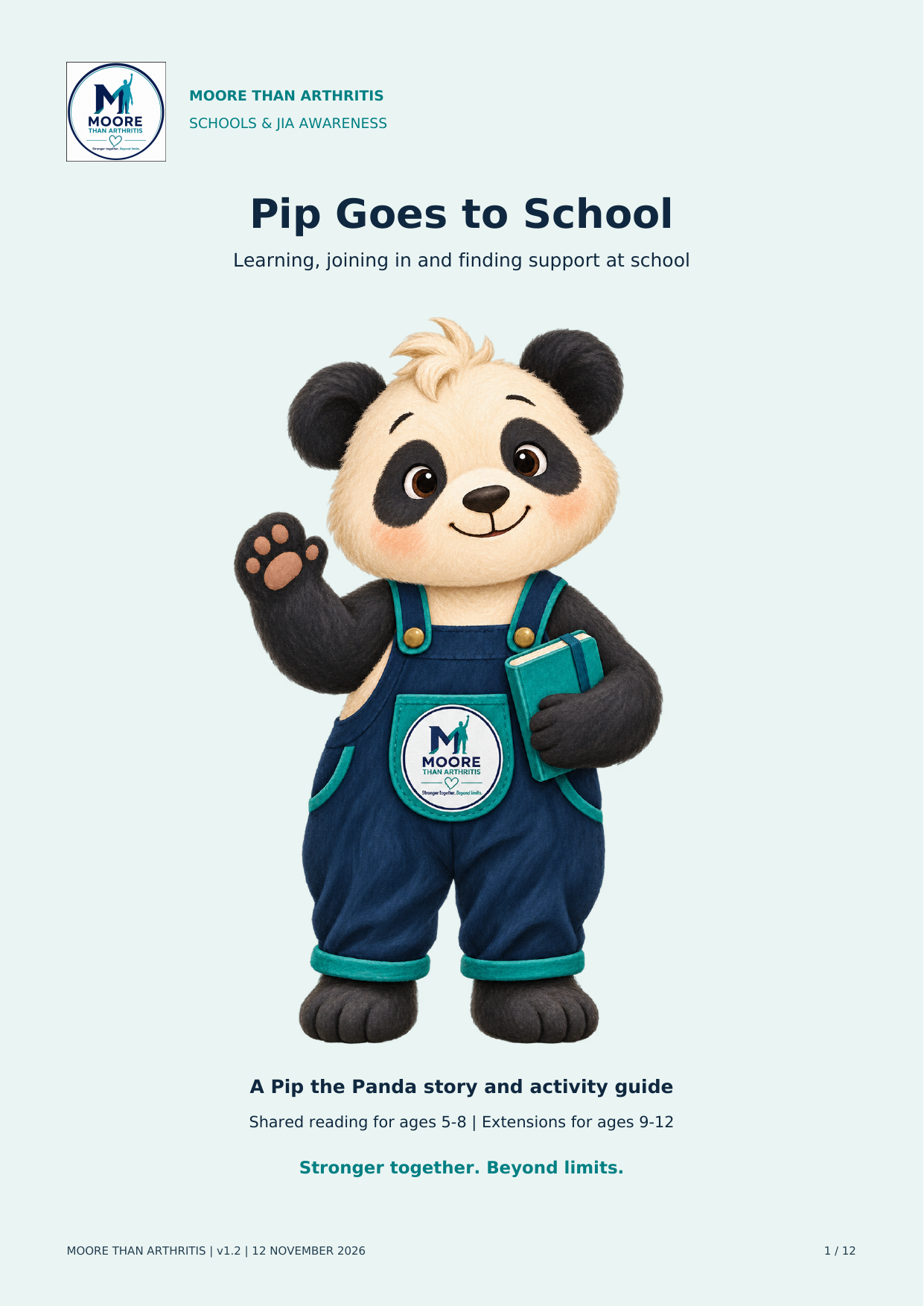
Pip Goes to School
Follow Pip through a school day and explore practical ways to learn, join activities and find support. Includes a complete story, a school support passport, classroom scenarios, older-reader activities and adult guidance.
Free illustrated PDF | 12 pages | Version 1.2
Download Pip Goes to School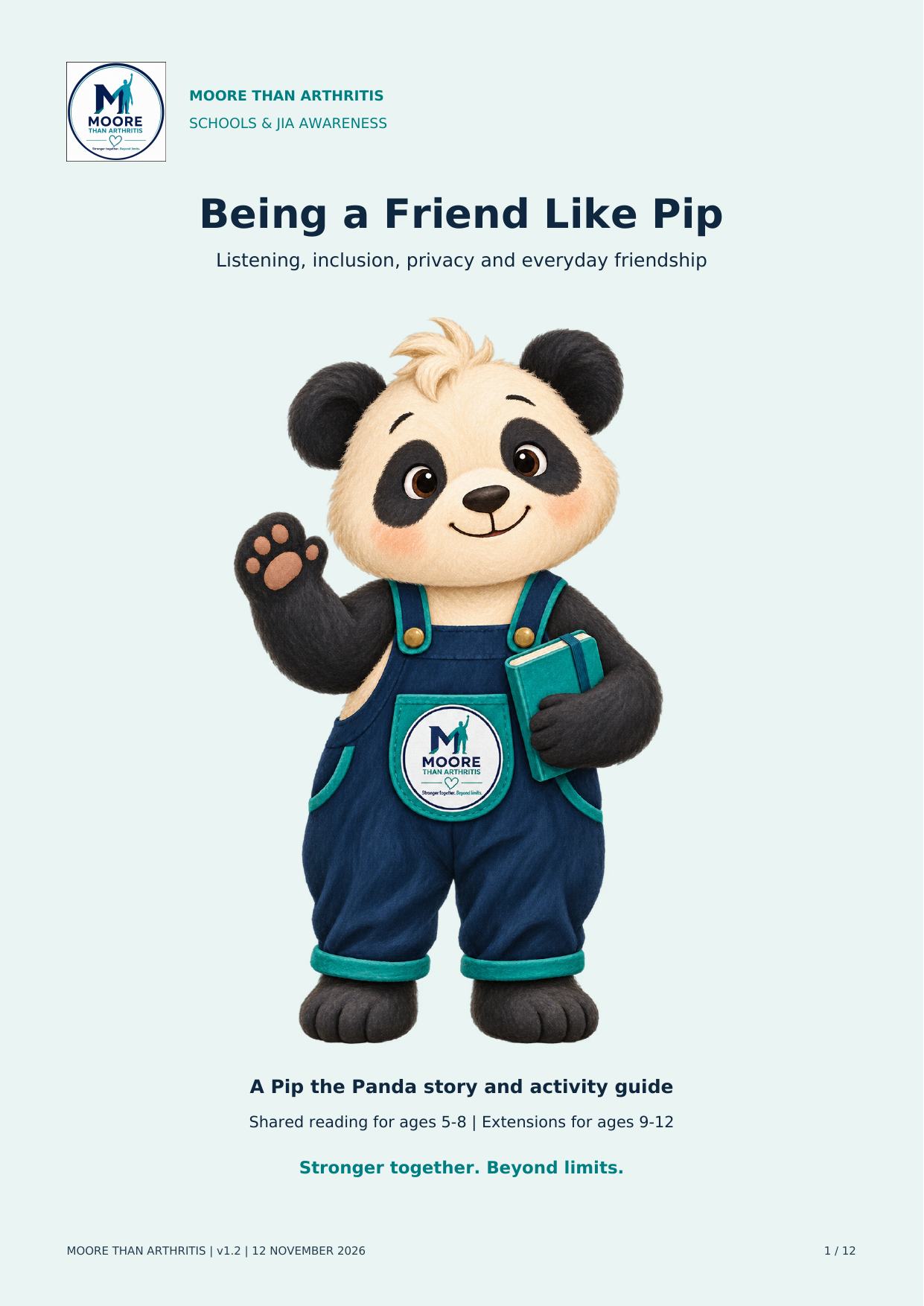
Being a Friend Like Pip
Explore listening, asking before helping, respecting privacy, including others and knowing when to get adult help. Includes a complete story, a club-design activity, discussion cards, older-reader scenarios and adult guidance.
Free illustrated PDF | 12 pages | Version 1.2
Download Being a Friend Like PipRead together. Let the child lead.
Start with the guide that fits the conversation you want to have. Read a short section, pause when needed, and let the child speak, point, draw or simply listen. Activities are invitations, not tests. Children do not need to share a diagnosis or personal experience to take part.
Each guide contains information for parents, carers and school staff. Adults remain responsible for care, safety and arranging support.
Short sections you can pause and revisit
Conversation prompts and activity pages
Guidance for parents, carers and school staff
Educational disclaimer: These guides provide general educational awareness and conversation prompts. They do not provide medical advice, diagnosis or treatment, and do not replace a child's individual clinical advice, healthcare plan or agreed school support arrangements. Speak to a qualified healthcare professional about individual health concerns.
Frequently asked questions
Who are the guides for?
Are the guides free?
Does a child need JIA to take part?
Do these guides provide medical advice?
Do they replace a pupil's healthcare plan?
Can our school ask about an awareness session?
Help shape Pip's next chapter
Parents, carers, educators and relevant professionals are welcome to share feedback on clarity, tone and usefulness. Please use our existing contact page and leave out children's names, diagnoses, school details and other private information.
Share feedback